

How to sleep with a toothache starts with reducing pressure and calming the pain safely. When it is late, the tooth pain is throbbing, and sleep feels impossible, elevate your head, use a cold compress, and take suitable over-the-counter relief. Arrange dental care promptly, especially if swelling or fever develops.

Why a Toothache Feels Worse at Night
Tooth pain often feels stronger at night because lying flat can increase blood flow and pressure around an inflamed tooth pulp. The quiet also removes daytime distractions, making every throb more noticeable. Some people clench or grind their teeth during sleep, and this bruxism can place additional force on a cracked, infected, or sensitive tooth. Raising your head and avoiding pressure on the painful side may make the discomfort easier to manage until you can see a dentist.
What to Do Right Now for Relief
Use these safe steps while you arrange professional care:
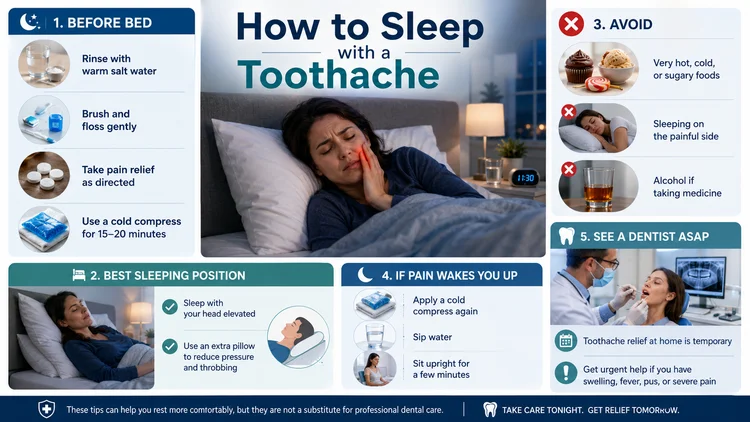
- Take an over-the-counter pain reliever such as ibuprofen or acetaminophen exactly as directed on the label, and ask a pharmacist first if you have medical conditions, use medicines, or are pregnant.
- Keep your head elevated with an extra pillow so pressure does not build around the painful tooth.
- Rinse gently with warm salt water to soothe irritation and clear debris without vigorous swishing.
- Hold a cold compress against your cheek for 15 minutes, then remove it before repeating.
- Avoid very hot, cold, sugary, sticky, or hard foods, and chew on the opposite side.
- Do not place aspirin directly on the tooth or gum because it can burn tissue, and do not apply heat to facial swelling.
These measures may calm pain, but they do not treat the cause; regular dental assessment remains essential. The same short-term measures may also help with pain relief before root canal treatment while you wait for professional care.
The Best Sleeping Position for Tooth Pain
Sleep with your head raised above your heart by using an extra pillow or resting in a slightly reclined position. This may reduce pressure around the painful tooth and make the throbbing less intense. If the toothache is mainly on one side, lie on the opposite side so the sore area is not pressed against the pillow or mattress.
Read more: Toothache in Scarborough
What Is Actually Causing the Pain?
Night-time tooth pain usually means a tooth or nearby tissue is irritated, damaged, or infected. Common causes include:
- A cavity that has reached or inflamed the tooth’s nerve.
- A cracked or chipped tooth that exposes sensitive inner tissue.
- A dental abscess or infection, often accompanied by swelling, fever, or a bad taste.
- A lost filling or crown that leaves the tooth unprotected.
- A wisdom tooth pushing through the gum or becoming trapped.
Only a dentist can identify the exact cause, and the toothache is likely to return until that problem is properly treated.

When Night Tooth Pain Is an Emergency
Most toothaches need prompt dental care, but certain symptoms mean you should not wait for a routine appointment:
- Facial swelling, especially when it spreads toward the jaw, eye, or neck.
- Fever or chills occurring with tooth pain.
- Severe pain that over-the-counter medicine does not control.
- A tooth that has been knocked out, displaced, or broken during an injury.
- Difficulty breathing or swallowing, which requires a hospital emergency department rather than a dental office.
Swelling combined with fever may indicate a spreading infection and requires same-day emergency dental care. If breathing or swallowing is affected, go to the hospital immediately.
Don’t Let a Toothache Get Worse Overnight
Lawrence Dental Centre provides emergency dental appointments in Scarborough for patients dealing with severe tooth pain, swelling, broken teeth, or possible infection. Our team can identify the cause, relieve the pain, and provide treatment.
See a Dentist in Scarborough
Lasting toothache relief comes from identifying and treating the cause, not repeatedly masking the pain. Lawrence Dental Centre offers same-day emergency dental appointments for Scarborough and nearby communities, accepts CDCP, provides direct insurance billing, and can assist patients in English and Farsi. Contact the clinic as soon as possible; when an inflamed or infected tooth pulp is responsible, root canal treatment may relieve the pain while preserving the natural tooth.
FAQ
Tooth pain can behave differently depending on its cause, but these answers cover the most common concerns patients have when a toothache prevents them from sleeping.
Why does my tooth hurt more at night?
Lying flat may increase pressure around an inflamed tooth, while the lack of daytime distractions makes the pain more noticeable. Night-time grinding or clenching can also worsen pain from a cracked or sensitive tooth.
What is the fastest way to stop tooth pain at night?
Take a suitable over-the-counter pain reliever as directed, apply a cold compress, rinse gently with warm salt water, and keep your head elevated. These steps provide temporary relief, but a dentist must treat the underlying cause.
What is the best sleeping position for a toothache?
Keep your head elevated above your heart and avoid sleeping directly on the painful side. A reclined position may be more comfortable than lying completely flat.
Can I put aspirin on my gum for tooth pain?
No. Aspirin placed directly against the gum or tooth can burn and damage the soft tissue without treating the source of the pain.
When is a toothache a dental emergency?
Seek urgent care for facial swelling, fever, uncontrolled pain, dental trauma, or a broken or knocked-out tooth. Difficulty breathing or swallowing requires immediate hospital emergency care.
Does a toothache mean I need a root canal?
Not always. Tooth pain may come from decay, a crack, gum irritation, a damaged filling, grinding, or a wisdom tooth, but a root canal may be necessary when the pulp is severely inflamed or infected.
Why does my tooth hurt when I lie down?
Lying flat can increase pressure around an already inflamed tooth, making a dull ache feel more intense or produce a stronger throbbing sensation. Raising your head may make the pain easier to tolerate until treatment.
Has a toothache ever kept you awake through the night?
Share what you experienced or leave your questions below