
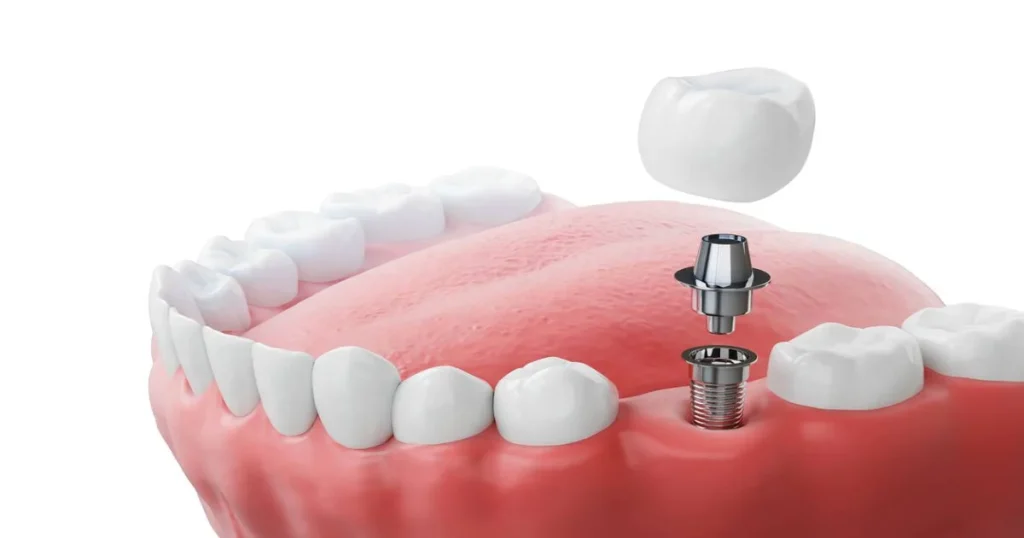
Screwless dental implants use a cement-retained crown attached to an implant abutment rather than a visible screw. The implant post itself is still placed inside the jawbone. Understanding how this design differs from traditional screw-retained implants can help patients make more informed decisions about their treatment options.
How a Standard Implant Is Attached
To understand screwless dental implants, it helps first to understand the more common screw-retained approach. In many implant restorations, the dental crown is connected to the implant using an abutment and a small screw that passes through the restoration. The opening left by the screw is then filled.
One advantage of a screw-retained implant is that it is retrievable. If the dental crown needs adjustment, repair, or replacement in the future, the dentist can often remove it by accessing the screw.
What “Screwless” Actually Means
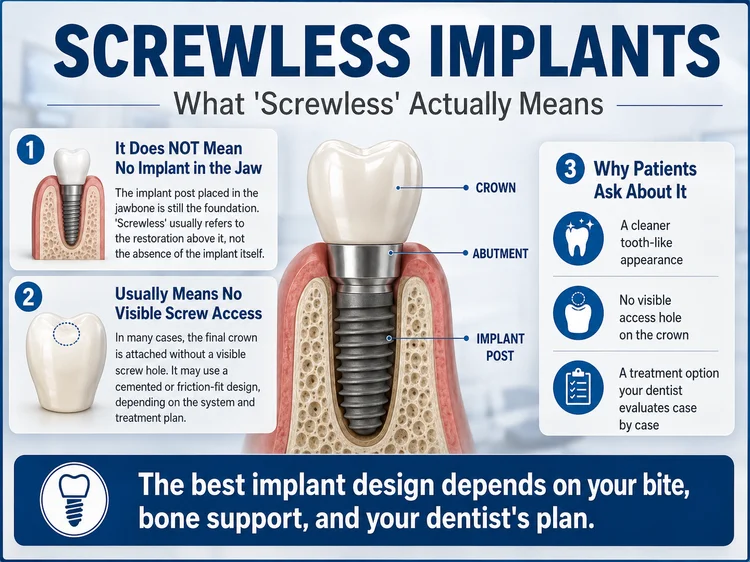
A screwless dental implant usually refers to a cement-retained crown, where the visible tooth portion is attached to the implant abutment using dental cement rather than a screw passing through the crown.
The term can sometimes be confusing because “screwless” does not mean there is no implant post in the bone. The titanium post is still surgically placed into the jawbone and acts as the foundation for the restoration. The difference is only how the dental crown connects to the implant structure.
A cement-retained crown may provide a more natural-looking surface because there is no screw access opening on the biting surface.
Possible Advantages
Cement-retained implants can have certain benefits in selected situations, although the right choice depends on the individual case and treatment planning.
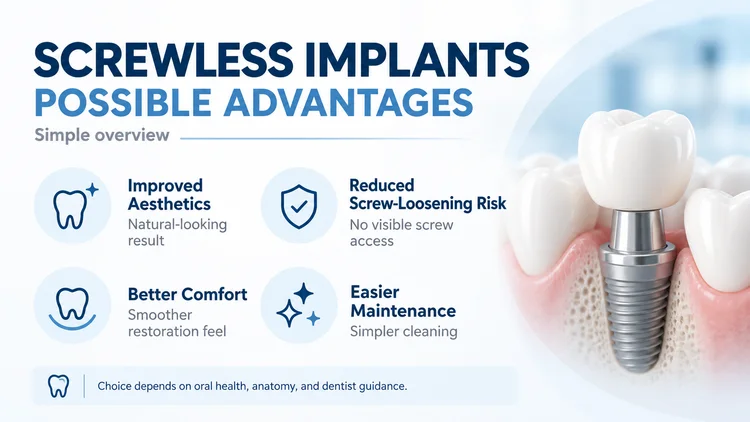
- No visible screw access hole can create a more natural appearance, especially in some front-tooth restorations where aesthetics are important.
- A solid porcelain biting surface may provide a uniform appearance without a filled screw channel.
- More flexibility in crown positioning may be possible in certain cases where the implant angle makes screw access less ideal.
- A natural-looking restoration design may be preferred when appearance and smile aesthetics are major considerations.
The final result depends on factors such as implant position, tooth location, bite forces, and the materials selected for the dental crown.
Possible Drawbacks
Although cement-retained crowns can work well in appropriate cases, they also have limitations that should be considered before treatment.
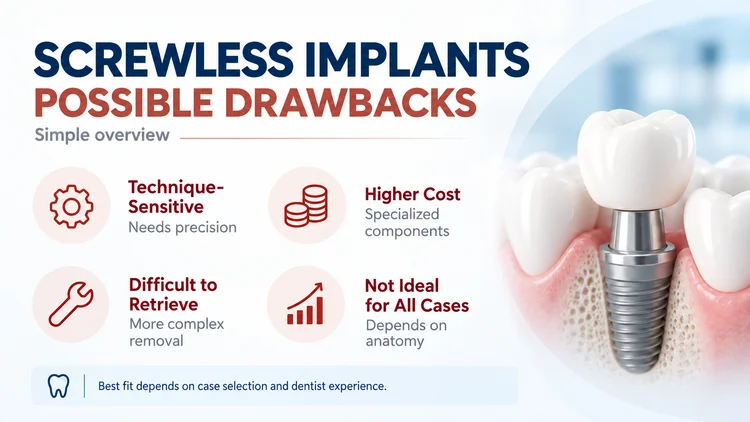
- The crown may be more difficult to remove if repairs or adjustments are needed because there is no direct screw access.
- Carefully remove any remaining excess cement, as trapped cement around the implant can irritate the surrounding gum tissue and may contribute to complications such as peri-implantitis.
- They are not suitable for every implant position or patient situation, especially when future retrievability is a priority.
The choice between cement-retained and screw-retained implants depends on the tooth location, bite, aesthetics, maintenance needs, and your dentist’s evaluation.
Which Type Is Right for You?
Neither screw-retained nor cement-retained implants are automatically better for every patient. The ideal choice depends on several factors, including where the missing tooth is located, how much aesthetic control is needed, the patient’s bite pattern, and how easily the restoration may need to be accessed in the future.
During treatment planning, an implant dentist evaluates the position of the titanium post, available bone, surrounding teeth, and long-term maintenance considerations. If you are exploring replacement options, learning more about dental implants in Scarborough can help you understand the overall treatment process and available approaches.
A consultation is the best way to determine which restoration method matches your specific oral health needs.
Here is also what CDA has said about “who can get implants”:
“If you are in good general health, have healthy gums and have enough bone in the jaw to hold an implant, dental implants might be right for you. If your jawbone has shrunk or if it has not developed normally, you may be able to have a bone graft to build up the bone.”
Talk Through Your Implant Options
Choosing an implant restoration involves more than selecting between screw-retained and cement-retained designs. Lawrence Dental Centre provides dental implant consultations with Dr. Sasan Shahrbandi for patients in Scarborough and nearby areas. The clinic is located at 1720 Lawrence Ave E, accepts CDCP with direct billing, and provides care in English and Farsi.
A consultation allows you to discuss your goals, examine your treatment options, and understand which implant approach may be appropriate for your situation.
Understand Your Implant Restoration Options Before Treatment Begins
Lawrence Dental Centre provides implant consultations to help patients understand their choices and plan treatment based on their oral health needs, goals, and clinical situation. Book a consultation to discuss your concerns and learn which approach may be suitable for your smile.
Conclusion
Screwless dental implants, more accurately known as cement-retained implant crowns, are one method of attaching a dental restoration to an implant abutment. They differ from screw-retained implants mainly in how the crown is secured, not in the implant placed inside the jawbone.
Both approaches have advantages and limitations. The best choice depends on factors such as aesthetics, bite, implant position, maintenance needs, and long-term treatment planning. A professional evaluation is essential for choosing the restoration approach that fits your individual case.
FAQ
What is a screwless dental implant?
A screwless dental implant usually refers to a cement-retained implant crown. The crown is attached to an implant abutment using dental cement rather than being secured with a visible screw.
Is a screwless implant the same as having no post in the bone?
No. “Screwless” only describes how the crown attaches to the implant structure. The titanium implant post is still placed into the jawbone to support the restoration.
What is the difference between screw-retained and cement-retained implants?
A screw-retained implant uses a screw passing through the crown to connect it to the implant. A cement-retained crown is bonded onto an abutment using dental cement and does not have a visible screw access hole.
Are screwless implants better for front teeth?
They may be considered in some front-tooth cases because the absence of a screw access hole can improve aesthetics. However, suitability depends on implant position, bite, and overall treatment planning.
What are the drawbacks of a cement-retained implant?
Potential drawbacks include reduced retrievability if the crown needs repair and the risk of excess cement irritating surrounding tissues if it is not completely removed.
Which type of implant crown is right for me?
The right option depends on your specific situation, including tooth location, aesthetics, bite forces, maintenance considerations, and your dentist’s evaluation.
Have you heard about screwless dental implants before, or are you comparing different implant options?
Share your questions below
Understanding the differences can help patients feel more confident before starting treatment.