

As you might know, dental implant aftercare is a process that begins immediately after surgery and can influence how well the implant heals. The first days after a dental implant focus on protecting the surgical site, controlling swelling, and supporting osseointegration — the process where the implant bonds with the jawbone. This stage-by-stage guide explains how to recover safely after dental implant surgery.
The First 24 Hours
The first day after implant surgery is focused on protecting the blood clot, reducing swelling, and allowing the surgical site to begin healing. Following your dentist’s instructions carefully during this period helps create the right environment for recovery. According to the Mayo Clinic, proper aftercare following implant surgery is an important part of the healing process.
- Bite gently on the gauze to control bleeding; some oozing is normal.
- Use a cold compress on the cheek in intervals to help reduce swelling.
- Take any prescribed or recommended pain relief exactly as directed.
- Rest and keep your head slightly elevated while sleeping or relaxing.
- Avoid forceful rinsing, spitting, using a straw, or smoking because these actions may disturb the blood clot and healing site.
What to Eat While You Heal
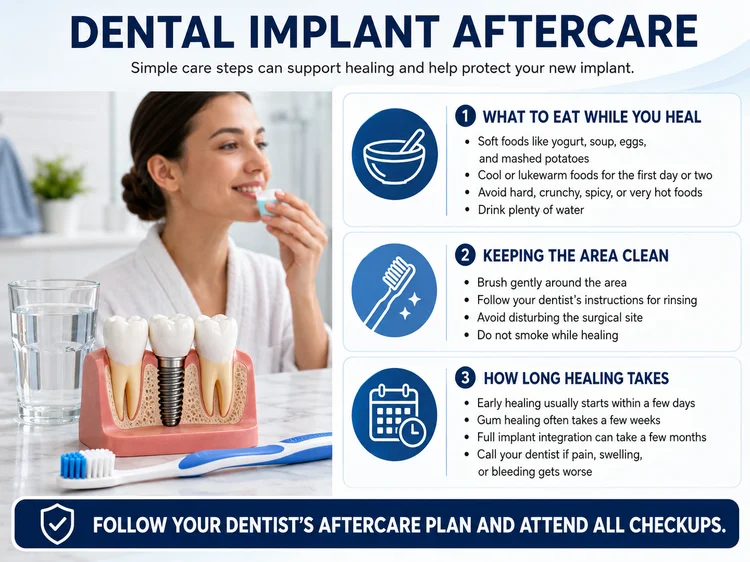
Choosing the right foods after dental implant surgery helps protect the surgical site and prevents unnecessary pressure around the implant. A soft diet reduces irritation as the tissues begin to recover.
Start with soft, cool foods such as yogurt, smoothies without a straw, mashed potatoes, and cooled soups. Gradually return to your normal diet as comfort improves over the first week.
Avoid hot, spicy, crunchy, chewy, or small, hard foods, such as nuts and seeds, that may irritate the area or become trapped around the implant. Chew on the opposite side of your mouth whenever possible to reduce pressure on the surgical site.
Keeping the Area Clean
Maintaining good oral hygiene after implant surgery is essential, but cleaning around the surgical area must be gentle. Bacteria buildup can interfere with healing, while aggressive brushing can irritate the tissues.
Gentle salt-water rinses can usually begin after the first 24 hours and may help keep the mouth clean, especially after meals. Continue brushing your other teeth normally, but be careful around the implant area until your dentist confirms it is safe to clean more directly.
Your dentist may provide additional instructions depending on the location of the implant, the type of procedure performed, and whether additional procedures such as bone grafting were required.
Warning Signs to Call Your Dentist
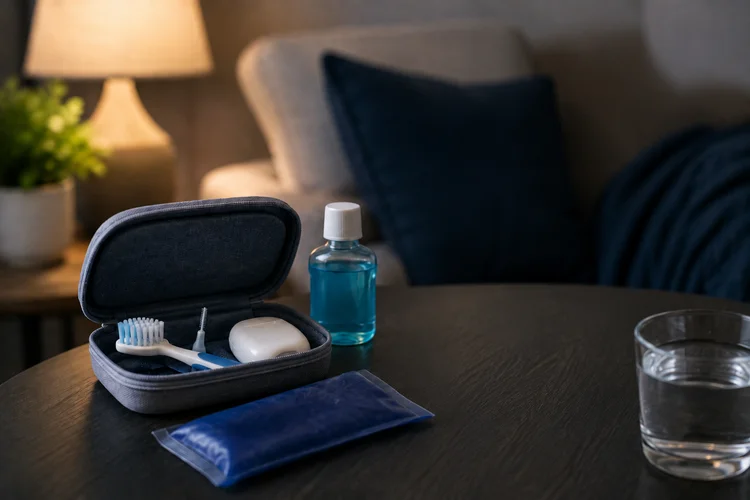
Most implant recoveries progress normally, but certain symptoms should not be ignored. Contact your dentist if you notice changes that suggest delayed healing or possible complications.
Warning signs include:
- Bleeding that does not slow after the first day.
- Swelling or pain that worsens rather than improves after a few days.
- Fever, unusual discharge, or a bad taste that may indicate infection.
- The implant feeling loose or unstable.
Call your dental office promptly if any of these symptoms appear. Early attention can help protect the implant and reduce the risk of complications such as implant failure. If you have questions about your recovery after dental implant treatment, contacting your provider early is always the safer option.

How Long Healing Takes
Dental implant healing happens in stages rather than overnight. The gums usually begin settling during the first week or two, but the deeper process of osseointegration, in which the implant becomes connected to the jawbone, takes several months before the final crown can typically be placed.
The exact dental implant healing time varies from person to person. Factors such as bone quality, implant location, overall health, and whether a bone graft was needed can affect the timeline.
Protect Your Dental Implant From the First Day of Healing.
Lawrence Dental Centre provides personalized implant care and guidance throughout the recovery process. Whether you are preparing for implant surgery or have questions after treatment, following professional aftercare instructions and attending follow-up appointments can help support a healthy, long-lasting result.
Caring for Your Implant Long Term
Dental implants are designed to be a long-lasting tooth replacement option, but they still require consistent care. While the implant itself cannot develop a cavity, the surrounding gums and bone remain vulnerable to inflammation and infection.
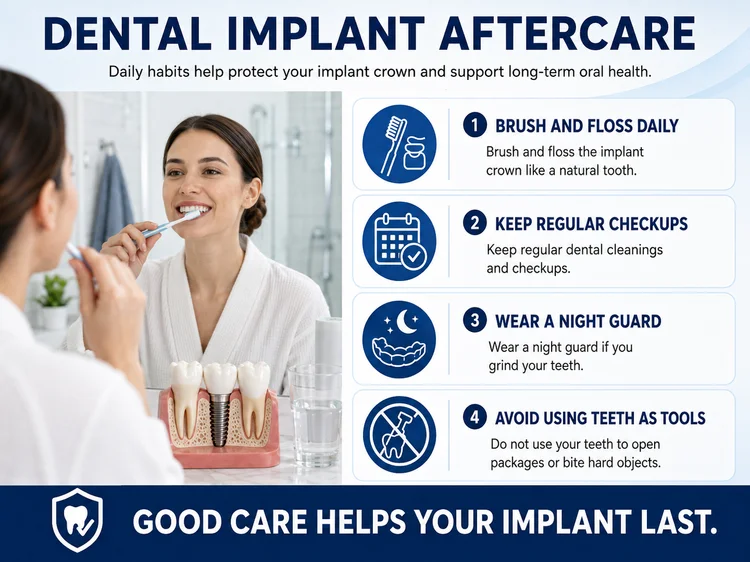
- Brush and floss around the implant crown just as you would with natural teeth.
- Maintain regular professional cleanings and dental checkups to monitor gum and bone health.
- Use a night guard if you grind your teeth to reduce excessive pressure on the implant.
- Avoid using your teeth as tools to open packages or bite hard objects.
Long-term maintenance helps reduce the risk of problems such as peri-implantitis, an inflammatory condition affecting the tissues around an implant. Regular professional cleaning is an important part of caring for dental implants over time.
Implant Care in Scarborough
Following your dentist’s instructions after surgery is the most important step in protecting your implant as it heals. Lawrence Dental Centre provides dental implant treatment with Dr. Sasan Shahrbandi, offers free consultations, and serves Scarborough patients from 1720 Lawrence Ave E.
The clinic accepts CDCP with direct billing and provides care in English and Farsi. If you have concerns during recovery, contacting your dental team early can help address problems before they affect healing.
Conclusion
Successful dental implant recovery depends on protecting the implant during the early healing period and maintaining excellent oral hygiene afterward. Following aftercare instructions, choosing appropriate foods, watching for warning signs, and attending regular dental visits all contribute to long-term implant health.
A dental implant is a long-term investment in your smile, but its success depends on the relationship between the implant, jawbone, gums, and your daily care routine.
FAQ
What can I eat after dental implant surgery?
Soft, cool foods are usually recommended immediately after surgery. Yogurt, mashed foods, smoothies without a straw, and cooled soups can reduce pressure on the surgical site while healing begins. Avoid hard, crunchy, spicy, or sticky foods that may irritate the area.
How long does a dental implant take to heal?
The healing timeline varies between patients. The gum tissue may settle within the first few weeks, while osseointegration between the implant and jawbone can take several months before the final restoration is placed.
When can I rinse my mouth after an implant?
Gentle rinsing is generally avoided immediately after surgery because aggressive movement can disturb the blood clot. Your dentist will provide specific instructions, but many patients begin gentle salt-water rinses after the initial healing period.
Is some bleeding normal after implant surgery?
Mild bleeding or oozing can be normal shortly after surgery. However, bleeding that continues or does not improve should be reported to your dentist.
What are the warning signs of implant problems?
Increasing pain, worsening swelling, fever, unusual discharge, bad taste, or a loose implant should be evaluated by a dental professional as soon as possible.
Can I smoke after getting a dental implant?
Smoking can interfere with healing and increase the risk of implant complications. Avoiding smoking during recovery is strongly recommended, and your dentist can provide guidance based on your situation.
How do I clean a dental implant long-term?
Care for an implant by brushing, flossing, attending professional cleanings, and maintaining regular dental checkups. The implant cannot get cavities, but the surrounding gums and bone still need protection.
Have you recently had dental implant surgery, or are you preparing for one?
Share your questions or recovery experiences below